


Five Simple Tips for Improving Your Balance
Avoid Falls and Stay on Your Feet–With a Little Help from our Multidisciplinary Team
Are you worried about falling and injuring yourself? Does limited mobility due to arthritis or another condition make you feel shaky? Balance challenges can certainly be difficult, but you do have options for improving your overall balance and stability!
One of the things we do at ProClinix Sports Physical Therapy & Chiropractic is help people work on the spatial awareness and muscular strength crucial in addressing balance challenges. This is especially true for people with a high risk of falling, where improved balance could save you a trip to the hospital.
Need a little help improving your balance? At ProClinix Sports Physical Therapy & Chiropractic, we blend physical therapy, chiropractic care, massage therapy, and acupuncture to provide a comprehensive approach to care, including helping you stay on your feet.
Why Should I Work on My Balance At All?
The older you get, the more important good balance becomes. Falls are one of the biggest threats to adults 65 years or older, causing millions of hospitalizations and emergency room visits every year.
While several factors contribute to this high fall risk–including age-related sensory and physical changes–you can do things to lessen your risk, and it’s never too early to get started! If you start working to improve your balance now, you’ll be in a better place as you age.
That said, there are other benefits to improving balance for younger people. A good sense of balance has a radiating effect on your overall fitness, helping to improve your posture and overall movement. You’ll be better able to catch yourself if you stumble or trip, and you might notice improvements in other physical activities, like running or playing sports.
How Can I Improve My Balance? Five Suggestions from Our Team
Go for a Walk:
Sometimes, the best solutions are the simplest. Walking helps build core and lower-body strength, two crucial components of good balance, and it’s safe and effective for most people. That said, if you’re struggling with balance, it’s important to speak to us first–you might benefit from initial balance training or using a mobility aid during your walks.
Restore Your Mobility:
Stiff or arthritic joints can negatively impact your balance. We can help improve your mobility through chiropractic adjustments, massage therapy, and safe, at-home mobility drills tailored to your individual needs.
Target Your Core:
If you’re really struggling with balance and instability, it may be time to focus on dedicated core exercises. Your core refers to the muscles that wrap around your spine–your back, hip, glute, and ab muscles. They keep your spine stabilized, which in turn helps you keep your balance. Not sure where to start with core strengthening? We can show you which exercises will work best for you.
Challenge Your Balance:
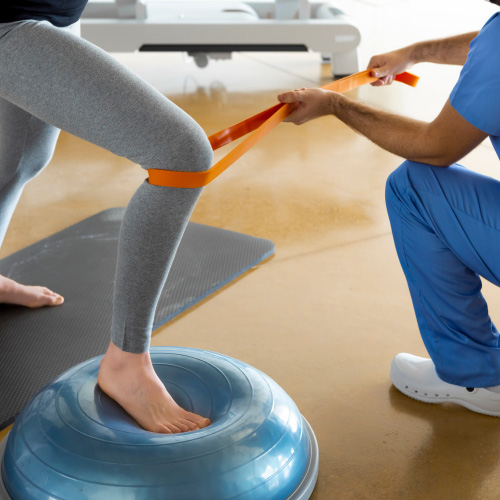
As with any other aspect of fitness, spending time on dedicated balance training can help you see results. Your goal is to find exercises that challenge your sense of balance without putting you at risk of falling–again, this is something we can help with.
Assess Your Balance:
If you want to get serious about improving your balance, schedule an appointment at ProClinix Sports Physical Therapy & Chiropractic to have your balance assessed by our team. We’ll run several balance screens to help us pinpoint the exact reason for your balance challenges–it may even be something you didn’t expect, such as inner ear issues. With a balance assessment, we can help you target your treatment to suit your exact needs.
Afraid You’ll Lose Your Footing? We’ve Got Your Back
The multidisciplinary team at ProClinix Sports Physical Therapy & Chiropractic specializes in movement and exercise. If you visit us for a balance assessment, we can design a customized treatment program that addresses your needs and abilities. For example, are you:
- Dealing with persistent pain that makes walking difficult? We can guide you through a drug-free pain management program, with treatments such as acupuncture, massage therapy, and more.
- Find most core exercises impossible? You’re not alone. Although activities like core planks have significant benefits, many beginners need to build up to them. We’ll show you core exercises that you can actually perform.
- Not sure how to challenge your balance? We’ll guide you through a progress balance training program, measuring your progress and increasing intensity as you go.
Don’t miss out on the benefits of good balance. Call us to request your balance assessment today!
Join Us for a Healthier You – Book Today!
Come back to ProClinix Sports Physical Therapy & Chiropractic and book your appointment today for personalized care and exceptional service!
Monthly Article
How Posture Affects the Shoulder
One significant factor contributing to shoulder pain is Upper Crossed Syndrome (UCS). This condition is characterized by postural changes that affect how the muscles of our upper back and shoulder girdle work, which in turn affects the normal movement patterns in the entire upper portion of the body.
The classic signs of Upper Crossed Syndrome include:
- Forward head posture: The head is positioned forward in relation to the shoulders.
- Rounded shoulders: The shoulders are rounded forward, causing the upper back to appear hunched.
- Increased thoracic kyphosis: The upper back has an increased curvature, leading to a rounded appearance.
- Protracted shoulder blades: The shoulder blades are positioned more forward and away from the spine.
- Weak deep neck flexors: The muscles at the front of the neck that help stabilize the head are weak.
- Tight pectoral muscles: The muscles in the chest area are tight and may contribute to the rounded shoulder posture.
- Weak scapular stabilizers: The muscles that stabilize the shoulder blades are weak, leading to altered movement patterns.
These issues often lead to shoulder pain, limited range of motion, and impaired muscle function. Although the signs are common in a lot of people, not everyone with these signs will have the same symptoms. This is why it is essential to consult one of our physical therapists to identify your specific needs and design a tailored treatment plan that addresses your situation.
Take the First Step Towards Lasting Relief Today
If you’re experiencing persistent shoulder pain, limited range of motion, or discomfort in your upper body, the time to act is now. These signs are not just distressing; they can have a long-term impact on your quality of life and overall well-being.
Reach out to ProClinix Sports Physical Therapy & Chiropractic today for a comprehensive assessment and personalized treatment plan designed to restore balance to your muscles, improve your posture, and, most importantly, alleviate your pain!
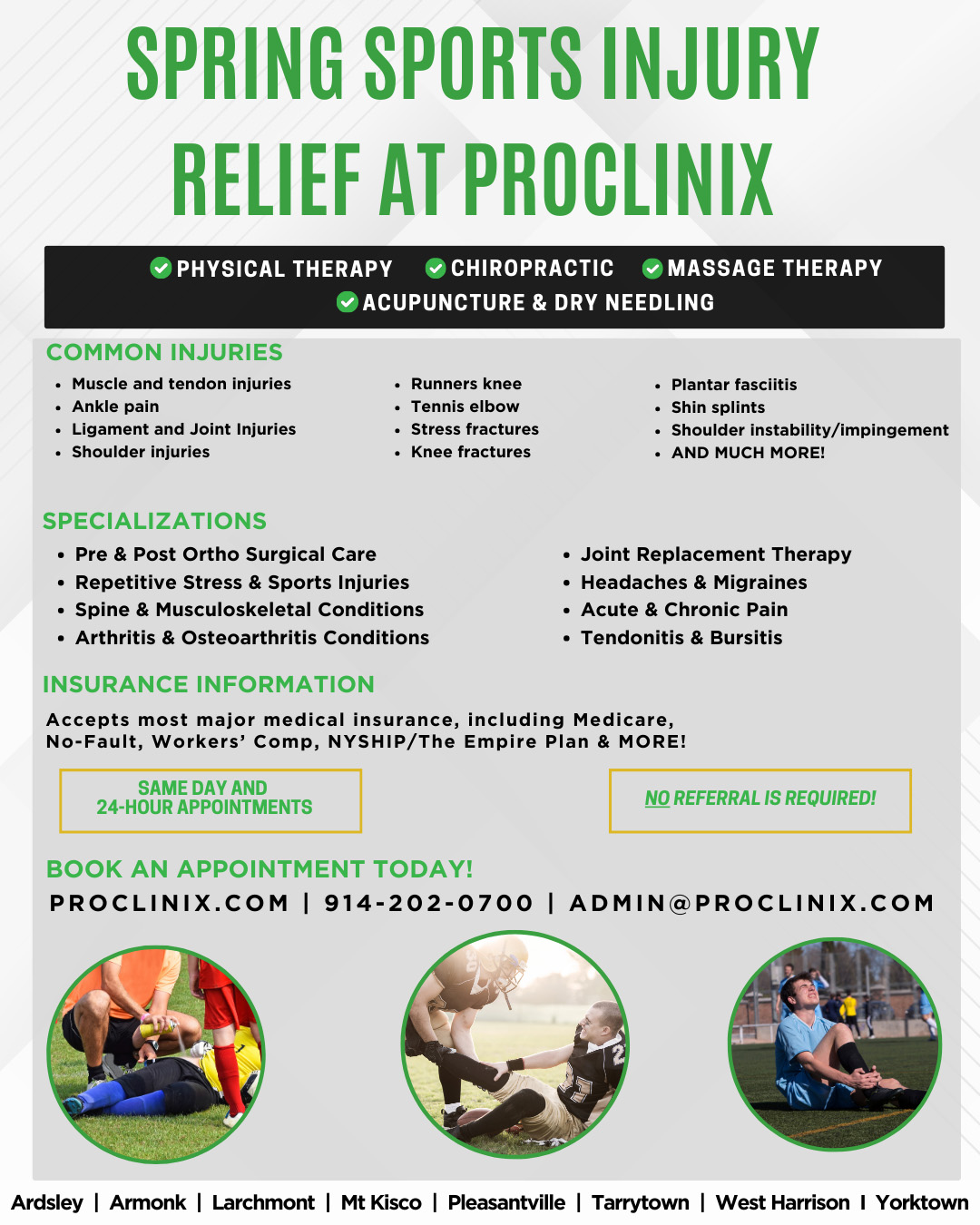
Check Out Our Videos!
At ProClinix Sports Physical Therapy and Chiropractic, we don’t just treat injuries; we build unstoppable athletes.
For 15 years in Westchester, we’ve been blending education with edge, guidance with grit, and rehab with resilience—because you deserve more than a recovery, you deserve to be better PERIOD.
Our athletes and patients are our purpose, because We Are ProClinix!
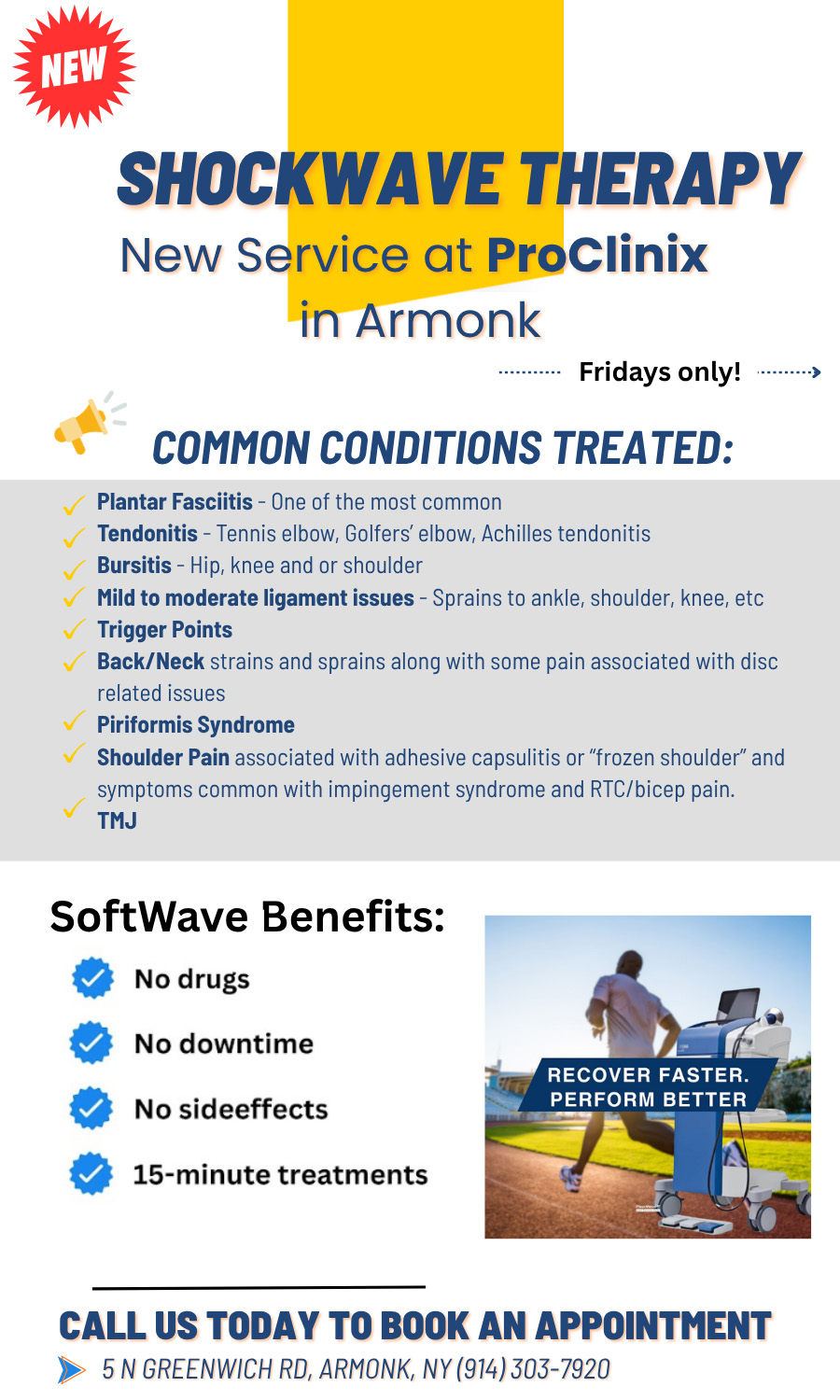
Meet Our Team

Joanna Ferdman
L.Ac. Acupuncturist


Melanie Mandel
PTA, CSCS

Dr. Brian J. Dombal
PT, DPT, Director of Physical Therapy

Dr. Alan H. Siegel
DC, Director of Chiropractic

Dr. Stefanie Tropea
DC, Chiropractic

Dr John Maloney
DC, Chiropractic

Dr Joseph Recchia
DC, ATC, Chiropractic

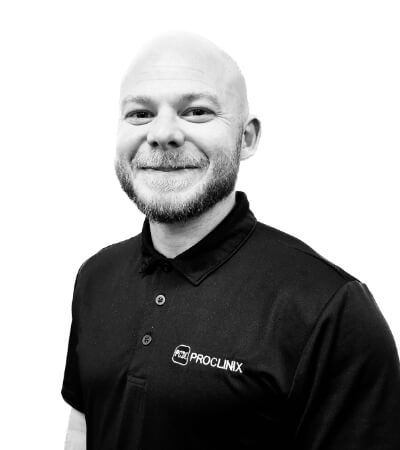
Dr. Tyler Fallon
PT, DPT, CSCS

Dr. Michael Donnelly
PT, DPT, OCS, CSCS

Dr. Emily Ford
PT, DPT

Dr. Elizabeth Bynum
PT, DPT

Dr. Stephen Grunbok
PT, DPT

Adam Pliskow
PT, MS

Dr. John Shlimoun
PT, DPT

Dr. Chris Ju
PT, DPT, FAFS, CSCS, USAW

Daniel Bogart
PT, MS, CSCS

Dr. Alice Canale
PT, DPT

Dr. Evan Qatani
PT, DPT, CSCS

Dr. Benjamin Hylka
PT, DPT

Dr. Daniel Brennan
PT, DPT

Dr. Nicholas Crecco
PT, DPT


Andrea Gurciullo
L.Ac. Acupuncturist, MTOM





Dr. Jordan Kosterich
DC, Chiropractic



Dr. Zachary Rachmil
PT, DPT