

A Multidisciplinary Approach To Tackling Hip Pain
You want to take care of some chores or go for a walk — but hip pain is keeping you on the couch. If this sounds familiar, know that you don’t have to suffer! At ProClinix Sports Physical Therapy & Chiropractic, our team of physical therapists, chiropractors, massage therapists, and acupuncturists will guide you through a simple process to address your hip pain so you can get active again.
This newsletter will take you through that process, from understanding your symptoms to the outcomes you can expect from our approach. Still have questions? Call us to schedule an appointment!
Pinpoint Your Symptoms
There are several potential reasons why someone might develop hip pain. To treat your pain effectively, we need to pinpoint what that cause could be.
When you visit us for your initial appointment, one of the first things we’ll do is ask you to share your symptoms. “Hip pain” often causes a lot more than just pain, and being able to describe your pain, mobility limitations, and other concerns helps us get a clearer picture of your condition.
For example, you know that your hip hurts. But when do you experience pain (i.e., during activity)? Does your pain come and go? Where do you experience pain? Is it just in your hip, or do you feel it elsewhere? Is the pain a dull ache? Sharp and shooting?
Make sure to share additional symptoms you might be experiencing, too. Here are some common ones:
- Stiffness/limited range of motion in your hip
- Weakness throughout the lower extremities
- Mobility issues, including walking, going up or down stairs, or struggling to stand up
- Difficulty performing everyday tasks, such as putting on your shoes — and let us know which ones
Identify a Cause and Develop a Treatment Plan
Thanks to your detailed symptom description, health history, and comprehensive physical exam, we should be able to determine the underlying cause of your hip pain.
If you’re 55 or older, there’s a good chance your hip pain stems from osteoarthritis. This degenerative condition causes cartilage and bone tissue to break down, leading to pain and restricted mobility.
However, hip pain can also stem from an injury. If you’re an athlete or particularly active person, you may have suffered an acute injury, such as a labral tear, in which a ring of cartilage in the hip socket becomes damaged. You may have also sprained your hip — that is, damaged the ligaments that hold the joint together.
However, even if you haven’t had an obvious injury, an injury could still be to blame. Overuse injuries are injuries that develop gradually and, in the hip, generally affect the soft tissue — your muscles, tendons, and ligaments. They usually occur due to repetitive movements or improper biomechanics.
Your treatment plan will vary based on the underlying cause of your pain, but in most cases, we aim to…
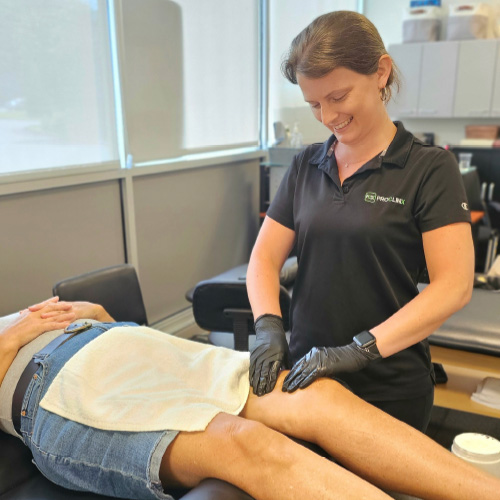
- Help manage acute pain with acupuncture, massage therapy, modalities, or gentle stretches.
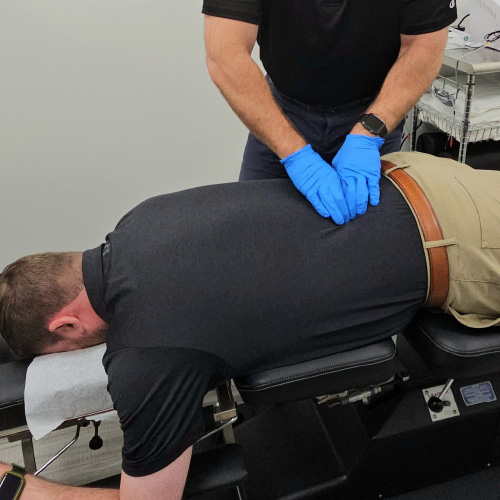
- Improve mobility and range of motion through chiropractic adjustments, targeted stretches, and exercises.
- Build strength in the muscles surrounding the hip to support the joint.
- Restore your ability to perform everyday movements, such as going upstairs — and for the athletes, we’ll help restore your ability to perform sport-specific movements.
Understand Your Outcomes
As with treatments, your exact outcomes will vary based on the underlying cause. However, other factors can come into play, too, such as age, health status, and the amount of time you can spend with your treatment program (whether in the clinic or performing home exercise programs).
For example, osteoarthritis has no cure, but you can manage your symptoms with regular physical activity. If you stick with your prescribed exercise program, you can minimize pain, slow the progression of your condition, and delay or even avoid surgery.
If you suffered an injury, you likely will be able to resolve your hip pain, usually within 1-3 months. However, if your injury was severe, full rehabilitation — the point at which you’ve fully restored strength and function — may take longer. Continuing any prescribed exercises is important even if you no longer feel pain.
Start Your Own Journey to Hip Pain Relief Today
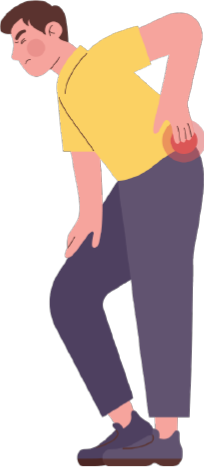
No matter the reason for your hip pain, the physical therapists, chiropractors, massage therapists, and acupuncturists at ProClinix Sports Physical Therapy & Chiropractic will guide you toward lasting relief.
Call us today to schedule an appointment to get started!
Join Us for a Healthier You – Book Today!
Come back to ProClinix Sports Physical Therapy & Chiropractic and book your appointment today for personalized care and exceptional service!

What is a HEP?
What’s A HEP — And Why Is It So Important to Your Success?
HEP stands for “home exercise program.” If you’re undergoing treatment with ProClinix Sports Physical Therapy & Chiropractic, there’s a good chance we’ll prescribe one to you.
It’s important to note that a HEP isn’t the same as an at-home workout program. With an at-home workout, your goal is general fitness. A HEP consists of curated exercises to help you achieve your rehabilitation goals.
We understand that an exercise routine can sometimes be difficult to work into a busy lifestyle. Therefore, we design our HEPs to be as straightforward as possible, with…
- Exercises you’ve done before
- A small time commitment
- Strategies for managing pain, if needed
However, we also want to make sure you understand why we prescribe a HEP at all! In fact, a HEP has multiple benefits:
- It improves outcomes: Patients who complete their prescribed HEP experience faster and more effective rehabilitation.
- It improves muscle memory: This means movements will become easier, and you’ll be able to more easily incorporate additional exercises during your in-clinic sessions.
- It helps develop a good habit: Even after you recover, regular physical activity is essential for good health. By completing your HEP, you get into the habit of moving daily.
In short, a HEP is a small way to make big changes! And if you think you might benefit from a personalized HEP, call us to schedule a consultation.
Check Out Our Videos!
At ProClinix Sports Physical Therapy and Chiropractic, we don’t just treat injuries; we build unstoppable athletes.
For 15 years in Westchester, we’ve been blending education with edge, guidance with grit, and rehab with resilience—because you deserve more than a recovery, you deserve to be better PERIOD.
Our athletes and patients are our purpose, because We Are ProClinix!
Article of the Month

“The Effects of Physical Therapy on Patients Diagnosed with Lower Extremity Neuropathy”
By Dr. John Shlimoun, PT, DPT
Lower extremity neuropathy can significantly impact mobility, independence, and quality of life—but physical therapy plays a powerful role in managing symptoms and restoring function. From pain relief and strength training to balance improvement and patient education, this article highlights how PT can make a lasting difference for those living with this condition.
Meet Our Team

Joanna Ferdman
L.Ac. Acupuncturist


Melanie Mandel
PTA, CSCS

Dr. Brian J. Dombal
PT, DPT, Director of Physical Therapy

Dr. Alan H. Siegel
DC, Director of Chiropractic

Dr. Stefanie Tropea
DC, Chiropractic

Dr John Maloney
DC, Chiropractic

Dr Joseph Recchia
DC, ATC, Chiropractic


Dr. Tyler Fallon
PT, DPT, CSCS

Dr. Michael Donnelly
PT, DPT, OCS, CSCS

Dr. Emily Ford
PT, DPT

Dr. Elizabeth Bynum
PT, DPT

Dr. Stephen Grunbok
PT, DPT

Adam Pliskow
PT, MS

Dr. John Shlimoun
PT, DPT

Dr. Chris Ju
PT, DPT, FAFS, CSCS, USAW

Daniel Bogart
PT, MS, CSCS

Dr. Alice Canale
PT, DPT

Dr. Evan Qatani
PT, DPT, CSCS

Dr. Benjamin Hylka
PT, DPT

Dr. Daniel Brennan
PT, DPT

Dr. Nicholas Crecco
PT, DPT


Andrea Gurciullo
L.Ac. Acupuncturist, MTOM





Dr. Jordan Kosterich
DC, Chiropractic



Dr. Zachary Rachmil
PT, DPT