

Utilizing Graston Techniques to Help Treat Common Injuries & Tendinopathies
By: Julia Yanarella, PTA
Soft tissue injuries include damage to the tendons, ligaments, muscles, and the fascia. When an area becomes inflamed or irritated this can cause abnormal tissue textures. Irritation and inflammation occur following an injury/trauma or repetitive motions on a single body part. Constant loading of a muscle can cause increased stress on the muscle tendon, leading to an increased incidence of tendinopathy. This is most common near the joints including shoulders, elbows, wrists, knees, and heels. Some common examples of tendinopathies that may benefit from Instrument-Assisted Soft Tissue Mobilization (IASTM) include; Tennis and Golfer’s Elbow, De Quervain’s Synovitis, Jumper’s Knee, and Achilles Tendinopathy.
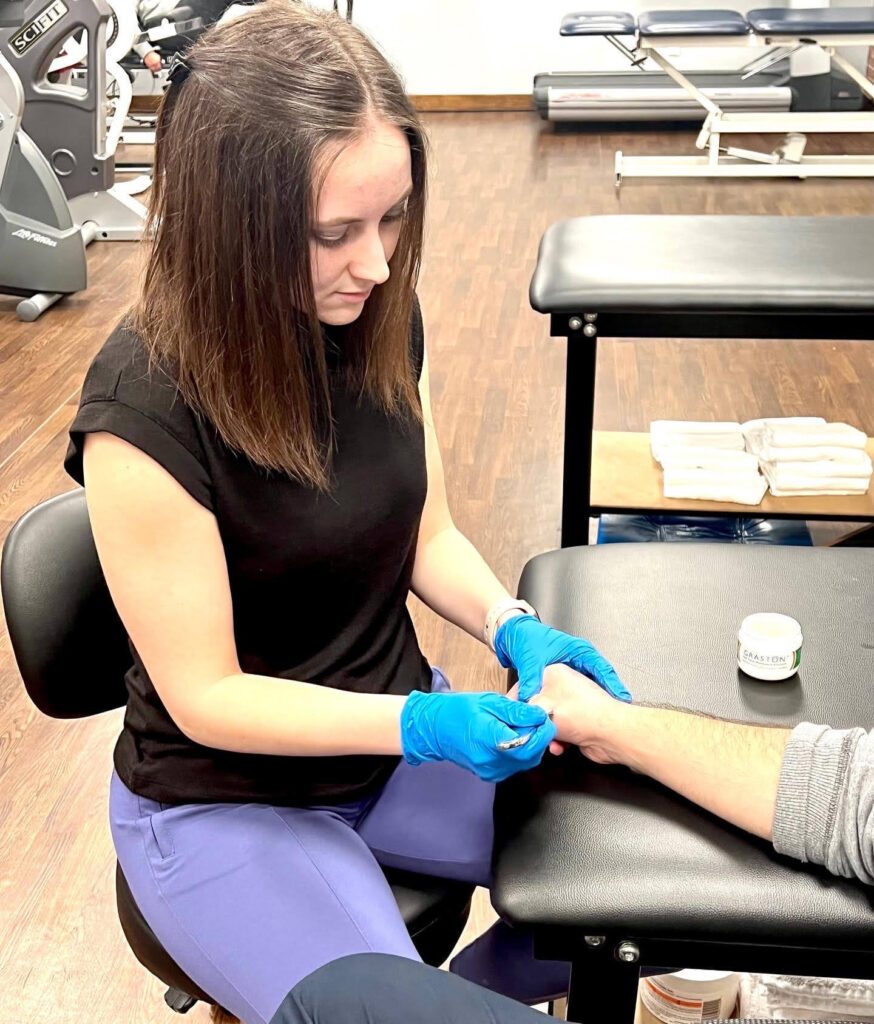
Graston Technique is a form of Instrument-Assisted Soft Tissue Mobilization (IASTM). IASTM is the use of instruments to allow for a more direct treatment of the soft tissues involved with movement. This is possible because the instruments amplify abnormal tissue texture to assist the clinician’s diagnostic skills. Using this technique, the provider has an increased ability to identify a specific area and allow for more precision. This form of mobilization can also be beneficial for the patient, as they are able to feel the abnormal texture as well when the instrument glides over that tissue.
Healthy connective tissue consists of cells called fibroblasts, as well as a component referred to as the extracellular matrix (ECM). The ECM includes both collagen and elastin. Elastin helps to support tissue flexibility and mobility, while collagen is an important factor in supporting the tensile strength of the muscle tissue. Throughout the body, collagen can be found laid out in different patterns depending on the structure. Structures like joint capsules, retinaculum, and the IT band are strong in multiple directions. This means the collagen needs to be laid down and in a random pattern to withstand the pull from all directions. For tendons and ligaments, it is the opposite. The collagen is laid down in only one direction. This allows the tendons and ligaments to be strong in the one direction that they are being pulled.
Collagen is a type of structural protein that makes up the framework of the cells and tissues. It provides structural support and plays an important role in cellular processes including tissue repair, immune response, and cellular communication. When there is trauma to an area, irregular layers of collagen occur. This creates crosslinks between normally occurring collagen and elastin fibers.
Graston Technique is helpful in treating tendinopathies by increasing fibroblast activity. Fibroblasts stimulate the production of collagen. The intent is to create controlled microtrauma to reset the inflammatory cascade and stimulate growth. When therapeutic exercise is done immediately following Graston Technique, the new tissue that is being produced is theorized to be laid down in a healthier, more organized fashion. The movement activates the alignment of the fibroblasts in the correct direction of stress that the exercises apply.