

Pickleball: Understanding The Risks and Injury Prevention
By: Dr. John Jude Shlimoun, PT, DPT
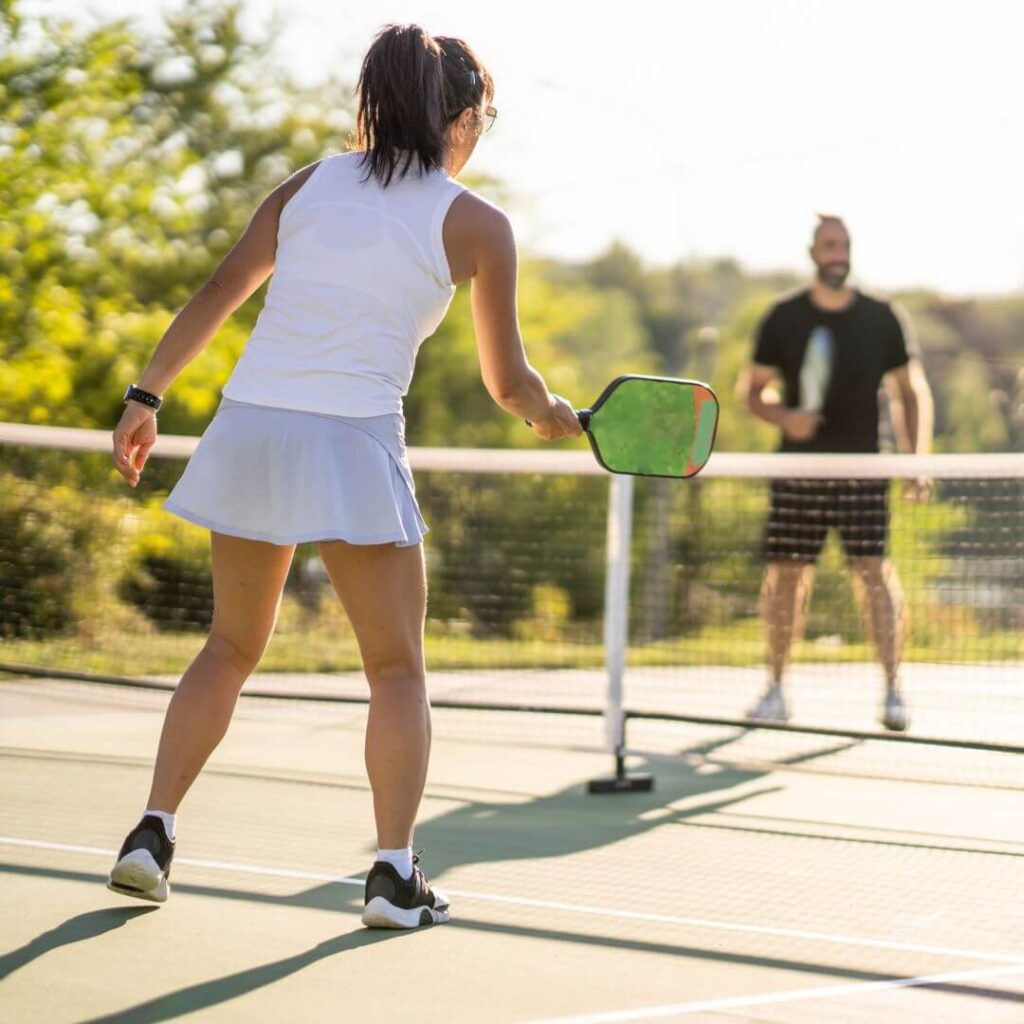
Pickleball is the fastest growing sport in America, gaining popularity and new players of all age groups everyday. Pickleball is a racquet sport that can be played both indoors and outdoors on a court that is substantially smaller than a tennis court requiring less running, however similar lateral, cutting, and jumping motions. Though pickleball is a game played by all ages, the “core” group of participants tend to be older, with 75% of players being 55 years old and up as per the USA Pickleball Association. The combination of picking up a novel sport, old age, and previously sedentary lifestyles has severely increased the risk of injury when playing Pickleball. As the popularity of the sport continues to grow the risk of injury does as well!
When reviewing injuries associated with playing pickleball the most common include:
Ankle Sprains – mainly occur with inversion, or a rolling of the ankle inward, are very common in tennis and the mechanism for this injury would be similar for Pickleball. Depending on the severity, this injury could result in reduced movement or inability to bear weight without pain. If weight bearing is painful, initial treatment may initially include crutches, or immobilization with an ankle brace. Further treatment consisting of relative rest, icing, compression, and elevation (RICE) are generally useful in the treatment of sprains of the ankle. Depending on severity, ankle sprains can take several weeks to resolve, but patients can generally resume their previous level of play if proper steps are taken during the healing process.
Achilles Strains/Tears – most commonly are associated with pain along the Achilles tendon, which will predominantly be felt at the posterior portion of the lower leg down to the heel bone. Treatment of Achilles tendon strains includes rest, focused stretching of the tendon, and controlled strength training of lower leg musculature. This injury can take numerous weeks to heal. A less common but more severe injury, Achilles tendon rupture, can occur with forceful movement of the ankle, usually a rapid change of direction and abrupt plantarflexion of the foot and ankle. This injury usually results in severe pain in the posterior ankle and an inability to bear weight or actively plantarflex the foot. This type of injury will often require surgical repair, and should be evaluated promptly for optimal long term outcome.
“Tennis” or “Pickleball” Elbow – overuse injuries associated with repetitive forceful gripping, repeated ball striking, and improper technique. These chronic injuries respond well to rest, flexibility training and gentle resistance exercise targeting the forearm, elbow, and shoulder musculature. Bracing of the wrist or elbow can also potentially provide increased comfort and stability while healing.
Wrist Fractures – Falls onto an outstretched hand are a common mechanism for wrist sprains, and can also result in a fracture. Typically, bruising and swelling will occur and an X-ray is most commonly needed to rule in/out a fracture. Early Mobilization and the RICE protocol (rest, ice, compression, elevation) are common forms of treatment.
Knee Meniscus and Ligament Damage – A sprain of the knee can affect both the ligaments and menisci, which is most commonly caused by rapid change of direction, lateral moving or pivoting movements. A sprain will often result in pain with weight bearing, usually worse with lateral movement. Acute injuries of the meniscus can include tears, which can present with the same mechanism as a ligament sprain, but often will result in the inability to bear weight, decreased range of motion, and significant swelling.
Falls tend to be the leading cause of injury while playing pickleball due to the fast nature of the sport and the constant change of direction and position. Physical therapy can play a crucial role in both injury prevention as well as injury rehabilitation in the most timely and effective manner. When returning to sport whether post injury or prior to beginning a new sport such as pickleball, a physical therapy screening should be conducted to test for strength, motion, and balance impairments. Once the impairments are noted, a guided strength and flexibility program will be developed as well as a dynamic warm-up and cooldown will be taught in order to further transition into return to sport. The physical therapist will ultimately guide the patient each step of the way in terms of strengthening proper musculature as well as performing dynamic warm-ups to ultimately reduce the risk of injury and optimize function!