

Shoulder Injuries in Throwing / Upper Extremity Athletes
By: Dr. Brittany Duarte, PT, DPT
With the weather getting warmer and spring sports in full swing, it is important to be aware and on top of any possible shoulder injuries. As a physical therapist, I commonly see and treat individuals with different types of shoulder pain that have resulted from overuse or lack of a proper warm-up or arm care routine, among other things. This article will give you a quick background on the shoulder structure, common injuries that may occur, and what to do to prevent injury.
The shoulder complex is made up of many different structures and joints and is the most mobile region in our body. The humerus (arm bone) articulates with the scapula (shoulder blade) which articulates with the clavicle (collar bone) in order to connect your arm to your body. In order for your arm to properly function in its full available range of motion, all of these structures need to work in harmony – something we call scapulohumeral rhythm. For your arm to rise, our scapula must appropriately rotate and accommodate for full motion. With great mobility comes a lack of stability so it is important that we make sure that the proper muscles are strong. Common muscles that play an important role are the rotator cuff, rhomboids, and serratus anterior, which all stabilize the shoulder while also allowing for proper motion.
Shoulder pain is one of the most common reasons people seek out physical therapy and one of the most common reasons for this pain is due to rotator cuff strains and impingement. The rotator cuff is made up of four muscles that connect your arm to your scapula and help stabilize your shoulder. A strain occurs when the muscle or tendon is partially or completely torn and can commonly be strained during high impact activities involving overhead motions such as throwing, shooting a lacrosse ball, or swinging a tennis racket. This can occur due to inadequate rotator cuff strength and repetitive impingement of the tendons underneath the bones at the edge of the scapula. Impingement can feel like a pinch when you try to lift your arm and, over time, can lead to small tears in the tendons. Common signs and symptoms of a rotator cuff strain can be a sharp pain along the front or back of the shoulder and a dull or achy pain that can shoot down the arm, sometimes past the elbow. You may feel a loss of strength or an inability to raise or rotate your shoulder. If you are feeling any of these symptoms it is important to address them and seek proper care. A physical therapist can identify the severity of injury and appropriately guide you on the best course of treatment. Although a full tear needs to be managed with surgery, most rotator cuff strains are treated with physical therapy focused on decreasing pain, increasing strength and flexibility, and incorporating sport specific exercises.
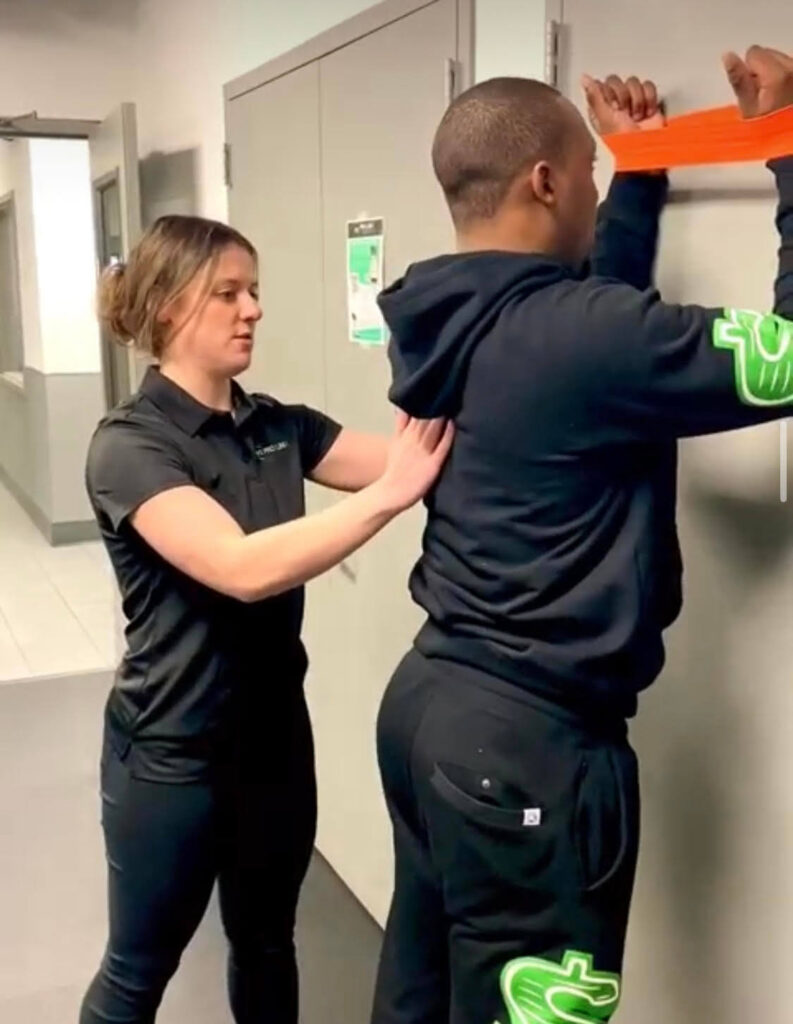
In order to prevent injuries, it is important that all athletes have proper warm-ups and cool-downs. Prior to practice or a game, dynamic stretching can best prepare the body for movement. Common dynamic shoulder stretches include arm circles, shoulder rolls, and band pull-aparts. Following activity, long duration stretching (held for 30-60 seconds) can help with recovery and improve flexibility. Proper muscle strengthening is also important to prevent injuries. Arm care routines focused on strengthening the rotator cuff and back muscles can help to ensure shoulder stability during sports. Some crucial exercises include rows, internal and external rotation, and front and lateral raises. Exercises and stretches should not cause pain and if they do you may benefit from physical therapy in order to address these symptoms and receive appropriate guidance. We can provide manual stretching and soft tissue mobilization for tight muscles and get you strong enough to return to your sport.