

Experiencing Jaw Pain? Active Release Techniques Combined with Chiropractic Care & Physical Therapy Can Help.
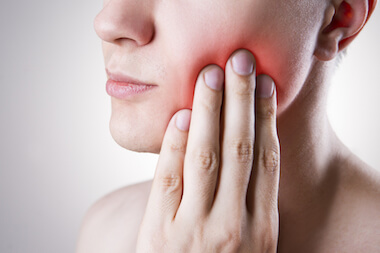
By: Dr Stefanie Tropea, DC
Your jaw aches. It locks up. You hear clicking and crunching when you open your mouth. Chewing hurts. You can’t open your mouth all the way. You’re getting headaches. Maybe you’re even getting ringing in the ears or occasional dizziness!
If you’re nodding your head to any of these, you may have Temporomandibular Disorder (TMD). This is a disorder of the temporomandibular joint (TMJ) that is most often caused by tight muscles of the jaw, neck, and upper back, or by arthritis of the TMJ. It can present as pain located immediately in front of the ear, but can refer pain to the face, neck, and shoulders. It affects about 10-35 million Americans, and women are 2-3 times more likely to suffer from the condition. There are several ways you could have developed TMD, such as grinding your teeth at night, poor posture (like forward head posture and hunched shoulders), stress, depression, nail biting, mouth breathing, and even a car accident, just to name a few!
At ProClinix Sports Physical Therapy and Chiropractic, we take a multi-modal approach to treating TMD, combining chiropractic care and physical therapy. Chiropractors are musculoskeletal specialists, and although we are most well-known for treating the spine, we often also treat other areas of the body, like shoulders, hips, knees, ankles, and, you guessed it – the TMJ! One of the ways we treat this condition is with Active Release Techniques (ART). This is a method by which we treat the soft tissues – the muscles, the ligaments, the nerves, and the tendons – to reduce pain, increase range of motion, and help speed up the healing process. During an ART session, the practitioner feels for tension or knots in the muscles that develop due to overload or repetitive use. Once that is established, the practitioner then applies deep pressure to the muscle, and instructs the patient to move that muscle from a shortened to a lengthened position, resulting in improved range of motion, improved function, and less pain.
The muscles of the jaw involved in chewing and opening and closing the mouth are very small but very powerful ones. They can become tight and dysfunctional, causing pain and loss of range of motion. ART is applied to these muscles, as well as to the muscles of the neck and upper back, to release tightness and tension. Gentle mobilization of the jaw and the joints of the neck and upper back is also helpful to improve range of motion and reduce pain. While manual therapy is helpful in treating symptoms of TMD, it’s only part of the puzzle.
A TMD treatment plan would not be complete without a physical therapy component. Strengthening exercises, stretches, and posture correction are critical to treating TMD effectively. During a physical therapy session, your physical therapist will guide you through focused exercises meant to strengthen the weak neck, upper back, and shoulder muscles, as well as give you stretches to lengthen and loosen the tight muscles. The goal is to increase range of motion, reduce pain, and improve posture.
Here are some tips on how to avoid TMD:
- Be aware of your posture. Don’t slouch!
- Don’t look down at your phone for long periods of time.
- Find healthy ways to manage your stress: regular exercise, meditation, breathing exercises
- Take frequent breaks from computer work.
- Visit your dentist. You might be grinding your teeth at night and may need a mouth guard.
If you’re experiencing any of the symptoms mentioned above and think you might have Temporal Mandibular Disorder, Active Release Techniques combined with physical therapy might be for you.