

Acupuncture and Menopause: Supporting the Body Through Transition
By Joanna Ferdman, L.Ac.
Menopause is often described as a hormonal event, but any woman who has lived through it knows it is far more than a shift in estrogen levels. It is a whole-body transition. Sleep becomes elusive. Temperature regulation seems to acquire a mind of its own. Emotions that once felt steady can become unpredictable. Energy fluctuates. Focus drifts. The body begins speaking a different language.
Conventional medicine has become increasingly sophisticated in its understanding of menopause and the role hormones play in driving these changes. Yet many women find themselves searching for approaches that address not only individual symptoms but the larger sense that their system no longer feels as regulated as it once did. This is where acupuncture offers a perspective that is both ancient and surprisingly modern.
Traditional Chinese Medicine views menopause not as a disease to be treated, but as a natural transition that requires adaptation. The goal is not to suppress the body’s signals but to help the body navigate them with greater ease. Rather than isolating hot flashes from insomnia, or anxiety from fatigue, acupuncture recognizes these symptoms as expressions of a larger physiological pattern.
In Chinese medicine, menopause is often understood as a gradual shift in the body’s yin and yang balance. Yin, which is associated with nourishment, cooling, and restoration, naturally declines with age. As this occurs, the warming and activating qualities of yang may become relatively unchecked. The result can look remarkably familiar: hot flashes, night sweats, restlessness, irritability, and difficulty sleeping.
While the language differs from that of endocrinology, the underlying observation is not entirely foreign to modern medicine. Both systems recognize that menopause represents a significant regulatory transition. One describes it through hormonal signaling pathways; the other through patterns of balance and imbalance. Both are attempting to explain the same human experience.
What makes acupuncture particularly interesting is that modern research increasingly suggests that its effects may be measurable through the very physiological systems that are disrupted during menopause. Studies have demonstrated that acupuncture can influence autonomic nervous system activity, modulate inflammatory pathways, affect neurotransmitter release, and alter the body’s stress response. These are not abstract concepts. They are systems deeply
involved in temperature regulation, sleep quality, mood, and overall resilience.
Clinical research has been especially encouraging in the area of vasomotor symptoms, the hot flashes and night sweats that affect a majority of menopausal women. Multiple randomized controlled trials have reported meaningful reductions in symptom frequency and severity among women receiving acupuncture. One widely cited study found that women experienced improvements not only in hot flashes, but also in sleep disturbances, emotional symptoms, and overall quality of life. Perhaps most interestingly, many participants reported benefits that persisted after treatment had concluded, suggesting that acupuncture may support longer-term regulatory changes rather than simply providing temporary relief.
The research mirrors what I have seen repeatedly in practice. Women often come to my office because of one symptom—usually hot flashes, night sweats, or insomnia—but what frequently unfolds over the course of treatment is something broader. Sleep deepens. Energy returns. Emotional fluctuations become less disruptive. Patients often describe feeling more like themselves again, even when not every symptom has disappeared entirely.
This broader response is one of the reasons acupuncture has remained such a valuable medical system for thousands of years. The treatment is not directed at a single symptom in isolation. It is directed toward the underlying pattern that is producing those symptoms.
When the body’s regulatory systems begin functioning more efficiently, multiple aspects of health often improve simultaneously. This observation aligns closely with how acupuncture has traditionally been understood. The treatment is not viewed as forcing the body into a particular state. Rather, it acts as a regulatory input, encouraging physiological systems to return toward equilibrium.
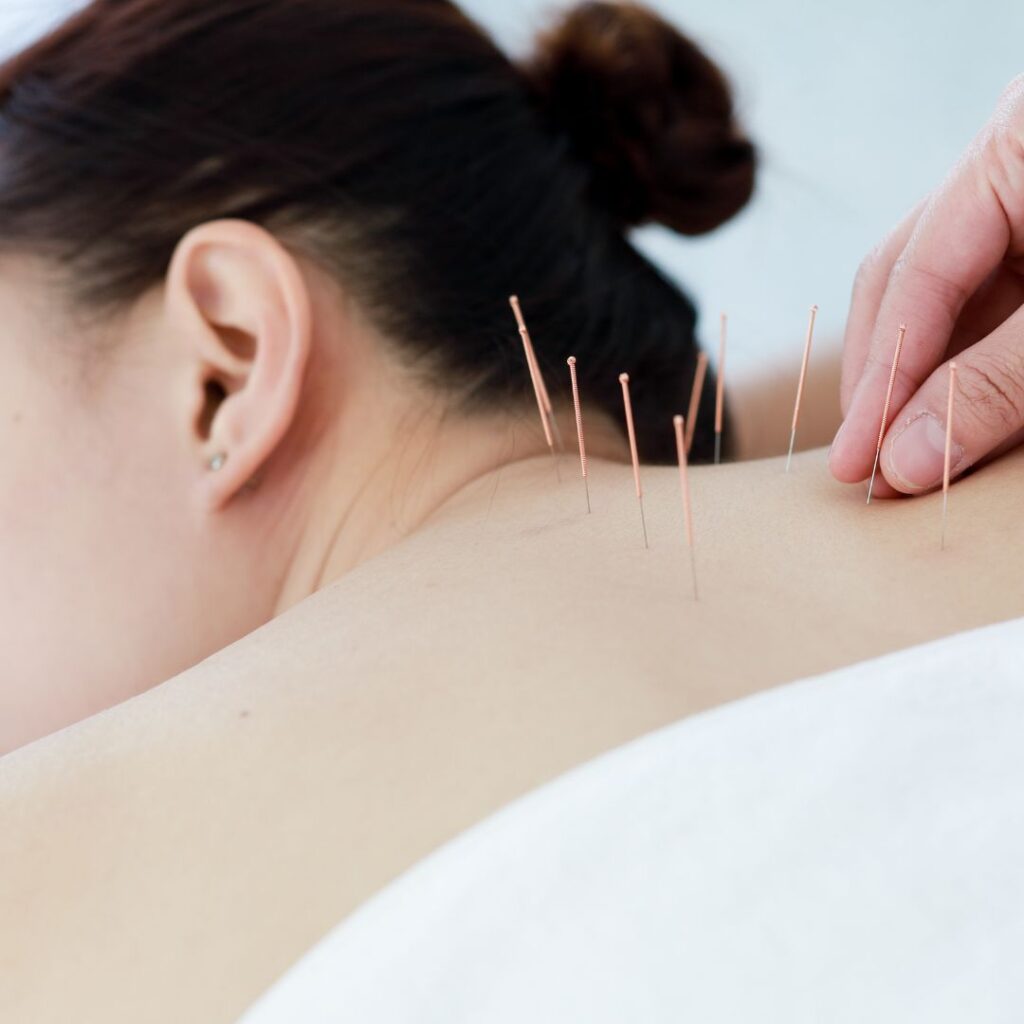
A needle placed at an acupuncture point is not adding anything to the body. It is providing information. The body’s own mechanisms perform the work. From a biomedical perspective, researchers continue to investigate exactly how this occurs.
Some studies point toward effects on thermoregulatory centers within the brain. Others highlight changes in neurotransmitters such as serotonin and endorphins, both of which influence mood, sleep, and the perception of discomfort. Still others suggest that acupuncture helps shift the nervous system away from chronic sympathetic activation—the familiar fight-or-flight response—and toward a more restorative parasympathetic state.
For women in menopause, this may help explain why improvements often extend beyond the symptom that initially brought them into the clinic. A patient seeking relief from hot flashes may discover she is sleeping more deeply. Another may notice improved emotional steadiness or greater energy throughout the day. From the perspective of Chinese medicine, these changes are not separate outcomes. They are evidence that the system as a whole is becoming more balanced. This holistic view is one of acupuncture’s greatest strengths.
Menopause does not occur in isolated organs or individual hormone receptors. It unfolds across the entire organism. The nervous system, endocrine system, immune system, and emotional landscape all participate in the process. Effective support therefore requires an appreciation for the body’s interconnectedness.
Acupuncture does not seek to replace conventional menopause care, nor does it require choosing one medical philosophy over another. Many women use it alongside hormone therapy, nutritional interventions, exercise, and other evidence-based approaches. Its value lies in its ability to address the broader pattern of dysregulation that often accompanies this stage of life—a benefit reflected not only in the growing body of research, but also in what practitioners
witness every day in the treatment room.
After years of treating women through this transition, I have come to appreciate that menopause is rarely just about hot flashes or changing hormone levels. It is often a period of profound physiological reorganization. The body is adapting to a new reality and, at times, asking for additional support. Acupuncture cannot stop that transition, nor should it. What it can do is help the body navigate it with greater stability, resilience, and ease.
Menopause is not a pathology. It is a transition. Like any significant transition, it asks the body to reorganize itself. Acupuncture offers support for that process by working with the body’s inherent capacity for adaptation and balance. In both the language of Traditional Chinese Medicine and the language of modern physiology, that may be one of the most important forms of medicine there is.